Missouri Monthly - September
Missouri Monthly – September 2026
Half Measures
Moderation moves into the flagship.
Last month we saw Gen Z choosing Captain Morgan and Smirnoff Ice because they’re sweet, easy to mix and easy to drink all night. In September, Diageo took that thinking into the bottle itself.
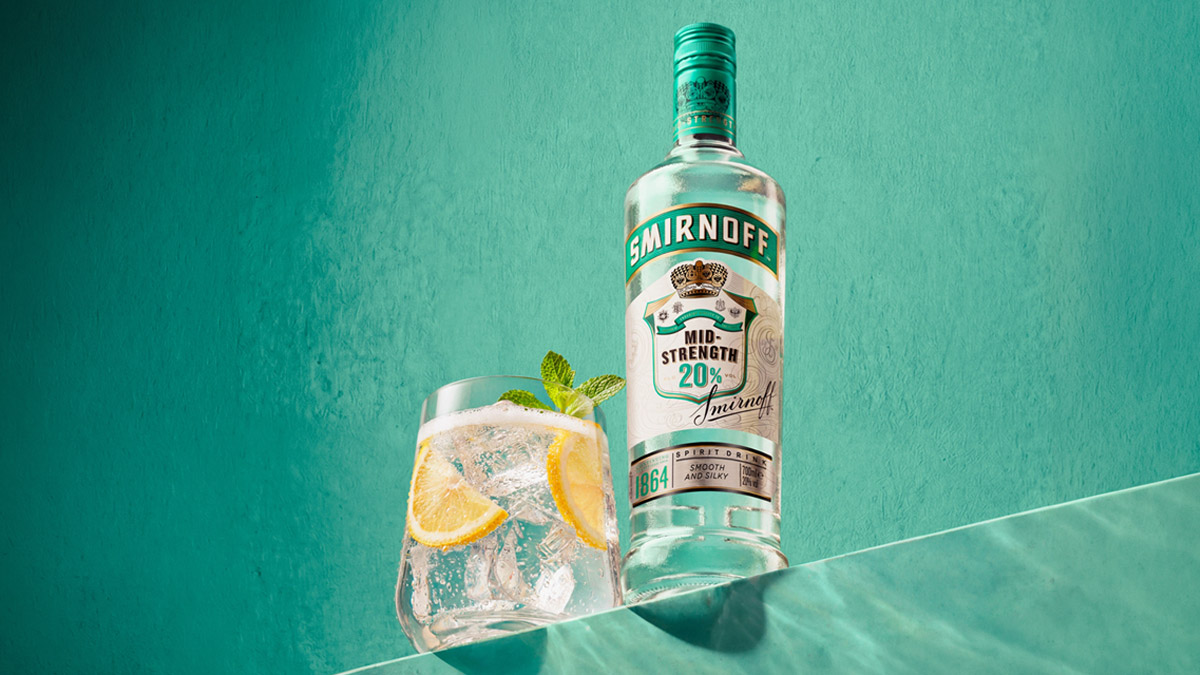
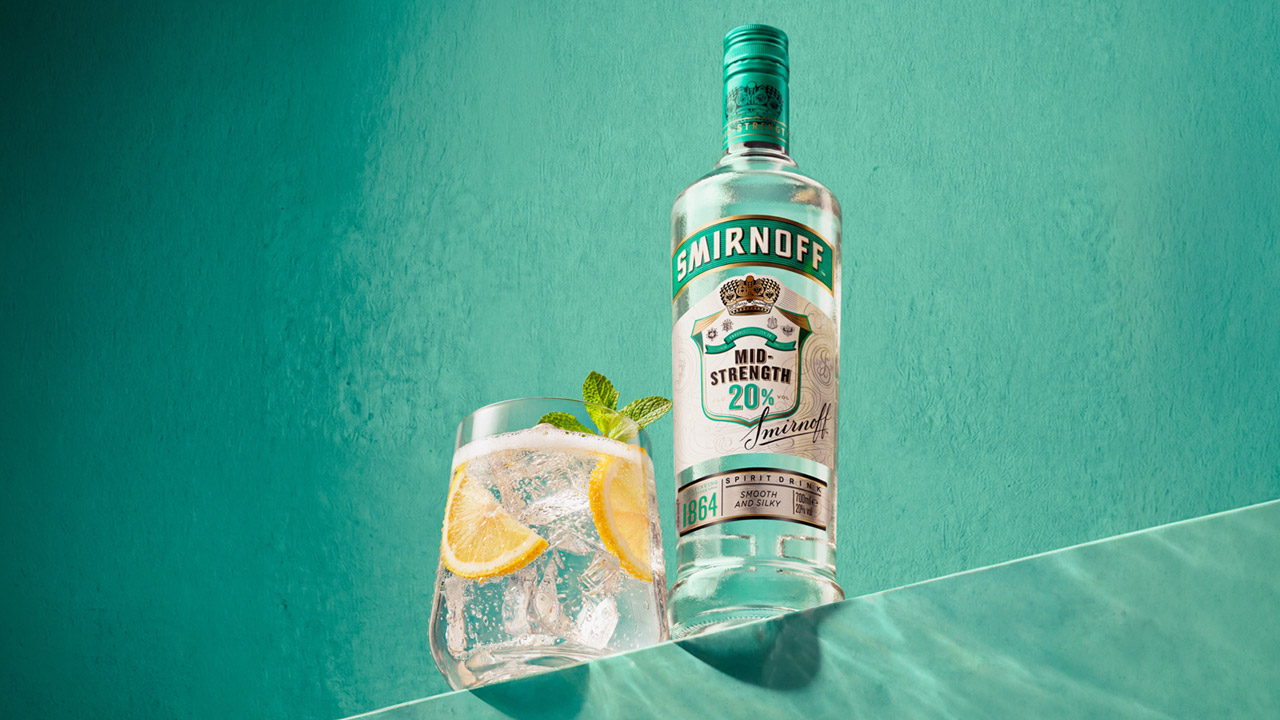
The group has launched 20% ABV versions of Gordon’s, Smirnoff and Captain Morgan, roughly half the strength of the originals. Diageo is pitching the range at how people now pace a night out: “zebra striping” (alternating alcoholic and soft drinks) and “coasting” (stretching a few drinks across a whole evening).
What stands out is where the moderation sits. Diageo has put lower strength on its three biggest names, which makes it part of the core portfolio.
Beer is heading the same way. Damm bought Old Speckled Hen from Greene King earlier this year and is now launching Old Speckled Hen Zero at 0.0% ABV. It will eventually replace the existing 0.5% version. A heritage ale carrying its full name into alcohol-free, with no caveats, shows how much confidence the category has gained.
The wider numbers back it up. EU breweries produced 34.4 billion litres of beer in 2025, with total output still edging down as alcohol-free volumes grow. Zero is taking a bigger share of a shrinking base.
Strategic takeaway: Lower strength now lives inside the master brand. The winners will price, package and talk about their lighter serves with the same confidence as the flagship, and sell the longer, better night those serves make possible.
Knock on Wood
The cask is the new age statement.
Whisky has always sold time. The age on the label did the heavy lifting on price, and at the very top it still does. Glenmorangie launched its oldest whisky ever in September, a 50-year-old at £25,800, in 149 hand-painted porcelain vessels. Further down the shelf, a run of new releases and award winners now lead with the wood they were finished in, and the cask has moved from the back label to the front. It gives drinkers a new question to ask at the bar: which wood? Let’s meet some of these contenders…
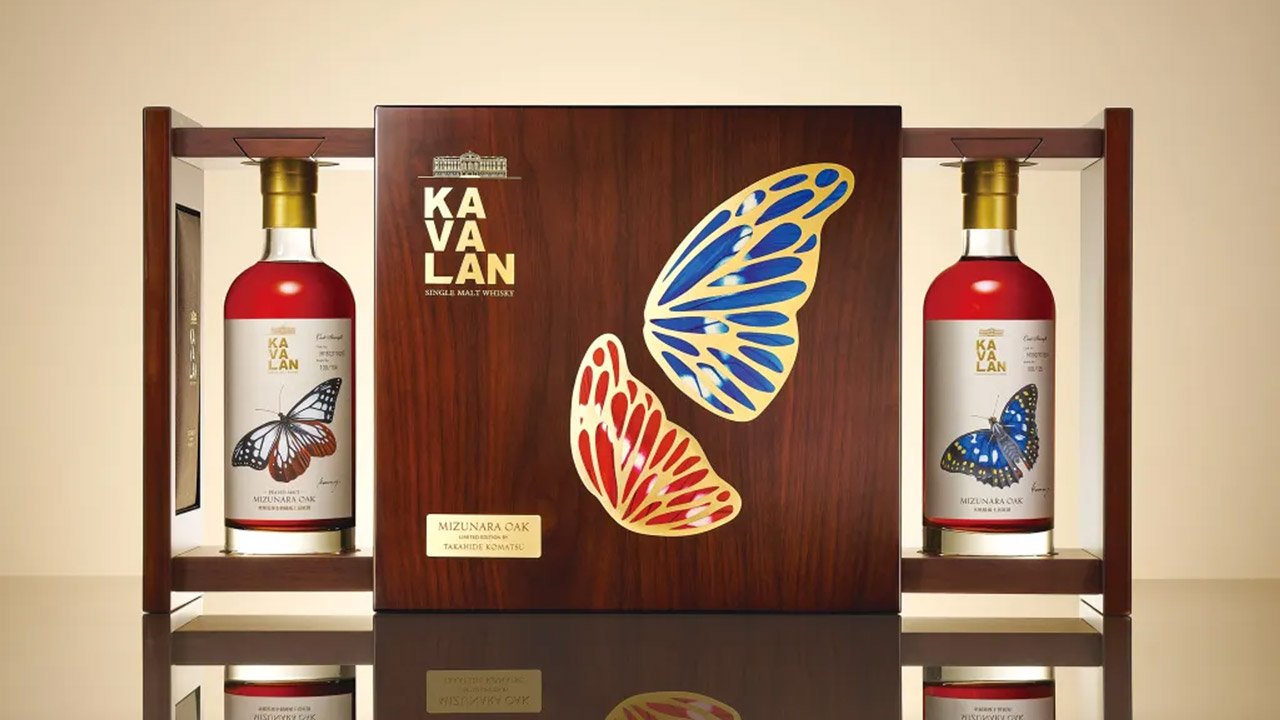
Kavalan Mizunara: Taiwan’s Kavalan released a peated and an unpeated whisky aged in Japanese mizunara oak in August.
Starlight Mizunara Reserve: The Indiana distillery gives this bourbon around seven years in charred American oak, then several months in mizunara. It took Double Gold at the San Francisco World Spirits Competition 2026.
Sylva: Seedlip founder Ben Branson’s non-alcoholic brand takes the wood without the years, drawing flavour from named species such as padauk and olivewood.
Crazy Cock Madhuca III: Indian distiller South Seas finishes this one in casks that once held a spirit made from mahua flowers. It won Gold at IWSC 2026 with 95 points.
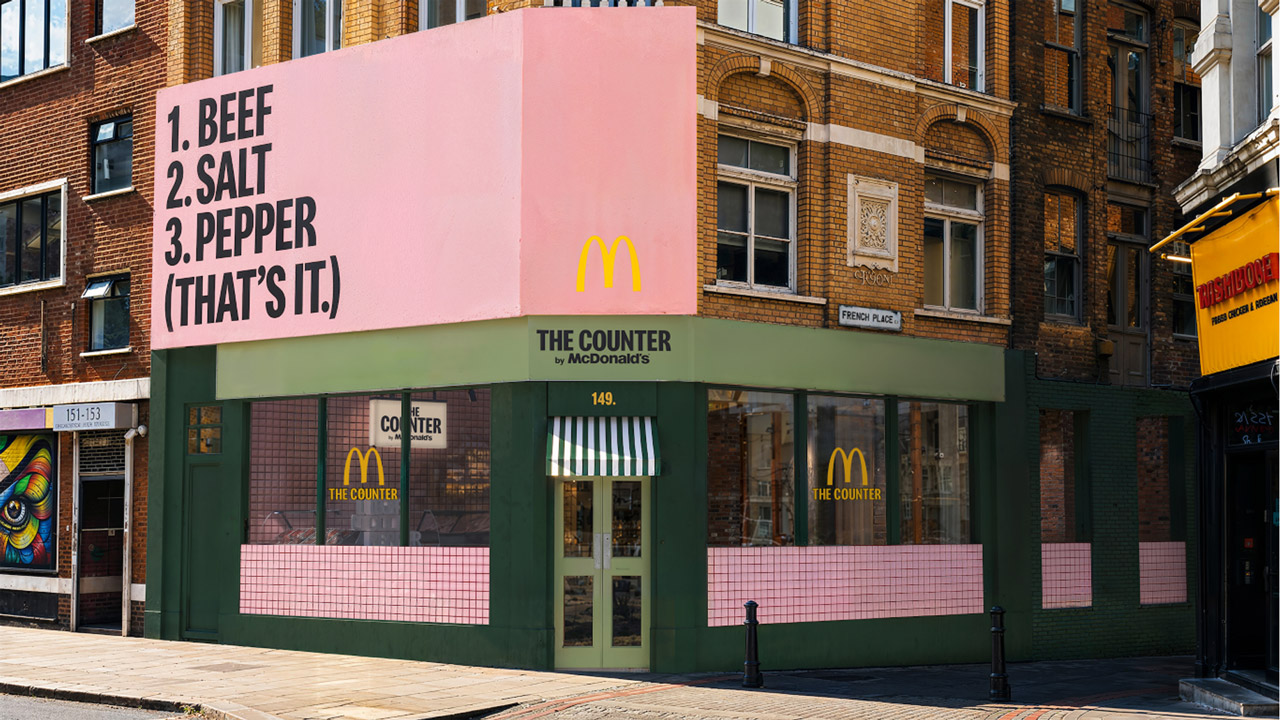
McDonald’s: The Counter
Last month it was KFC pouring French wine. In September, McDonald’s turned butcher. From 17 to 19 September, The Counter recreated a traditional high-street butcher’s in Shoreditch to show what goes into McDonald’s burgers. There were butcher’s blocks, premium British and Irish cuts, farmers to meet, and a patty-making station where visitors shaped their own patty to take home. We loved the interaction here, the takeaway frozen burgers in a branded hessian goody bag, and the ability to chat direct to the farmers and suppliers. Giving people a patty they made themselves is a smart, tangible way to make a supply chain feel real.
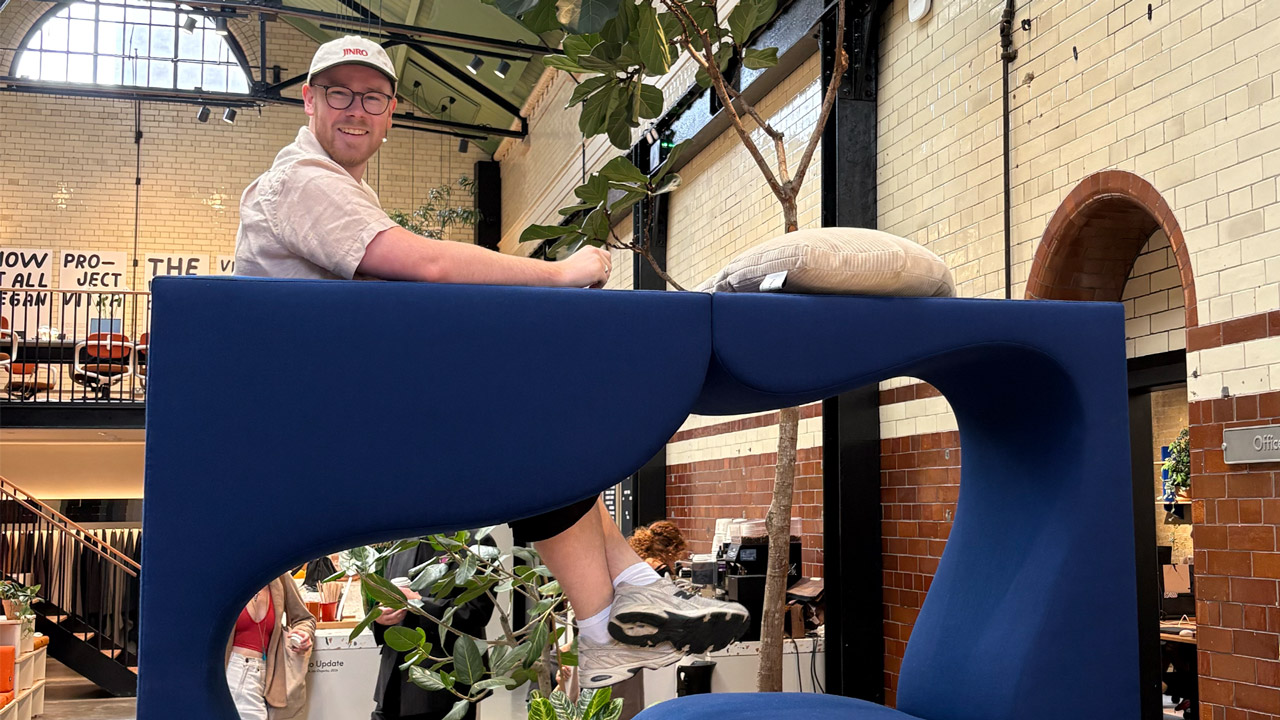
London Design Festival 2026
Our 3D Designer Ben spent London Design Festival hopping between the city’s design districts. First stop was Design Burger’s pop-up at Kachette Annex in Shoreditch (yes, last month’s KFC wine bar spot), launching The Product Design 100, a hardback of 100 standout products from the likes of Nothing, Rimowa and teenage engineering. Ben’s picks were the Sigma cameras and Bang & Olufsen’s Beolab 90, a speaker that costs over $200,000 a pair. Next was the London Transport Museum for “Place by Design or Connection?”, debating whether places become culturally relevant through planning, or whether that has to grow naturally. It’s a good question for brands too.
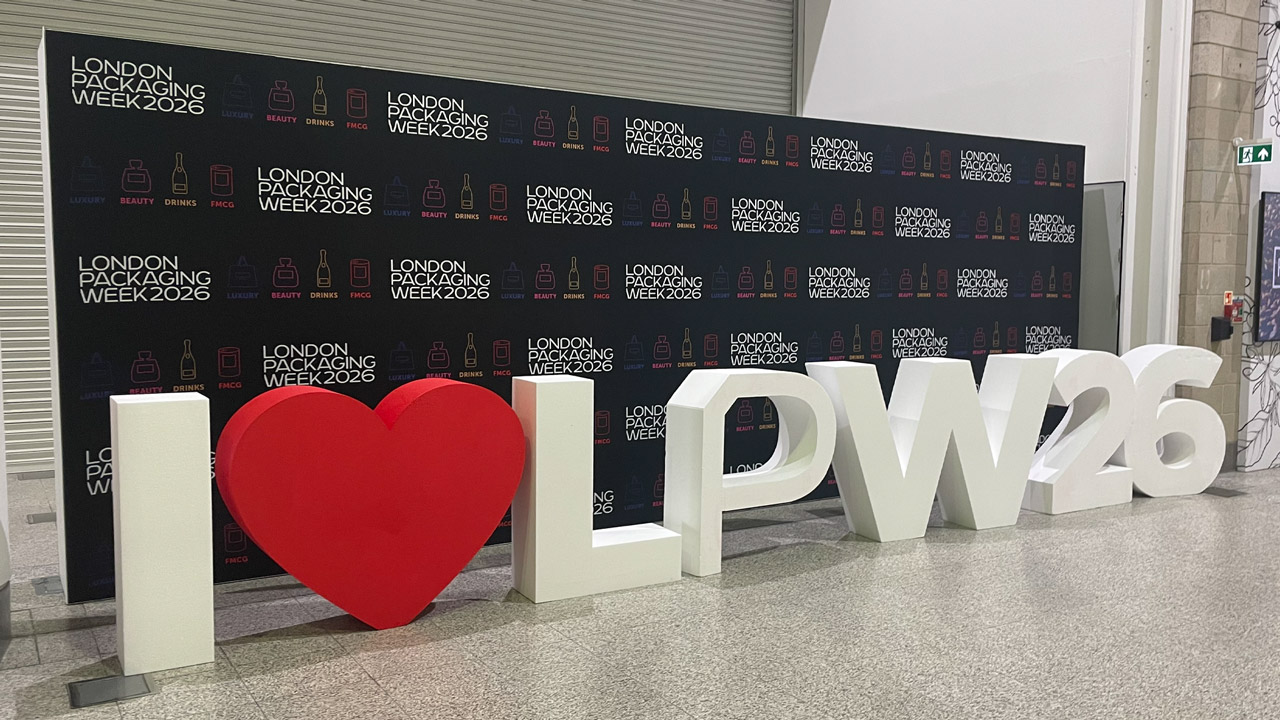
London Packaging Week 2026
We spent two days at ExCeL for London Packaging Week, its biggest edition yet, with 6,688 visitors and more than 230 exhibitors across luxury, beauty, drinks, food and FMCG. Our highlight was the official launch of Cool>Can, billed as the world’s first commercially ready self-cooling drinks can. Developed by Welsh firm deltaH Innovation, it uses a patented can-within-a-can system that chills the drink by around 10 to 15°C when you activate it. If Cool>Can works at scale, any drink could own the festival, the beach or the train, with no fridge needed…
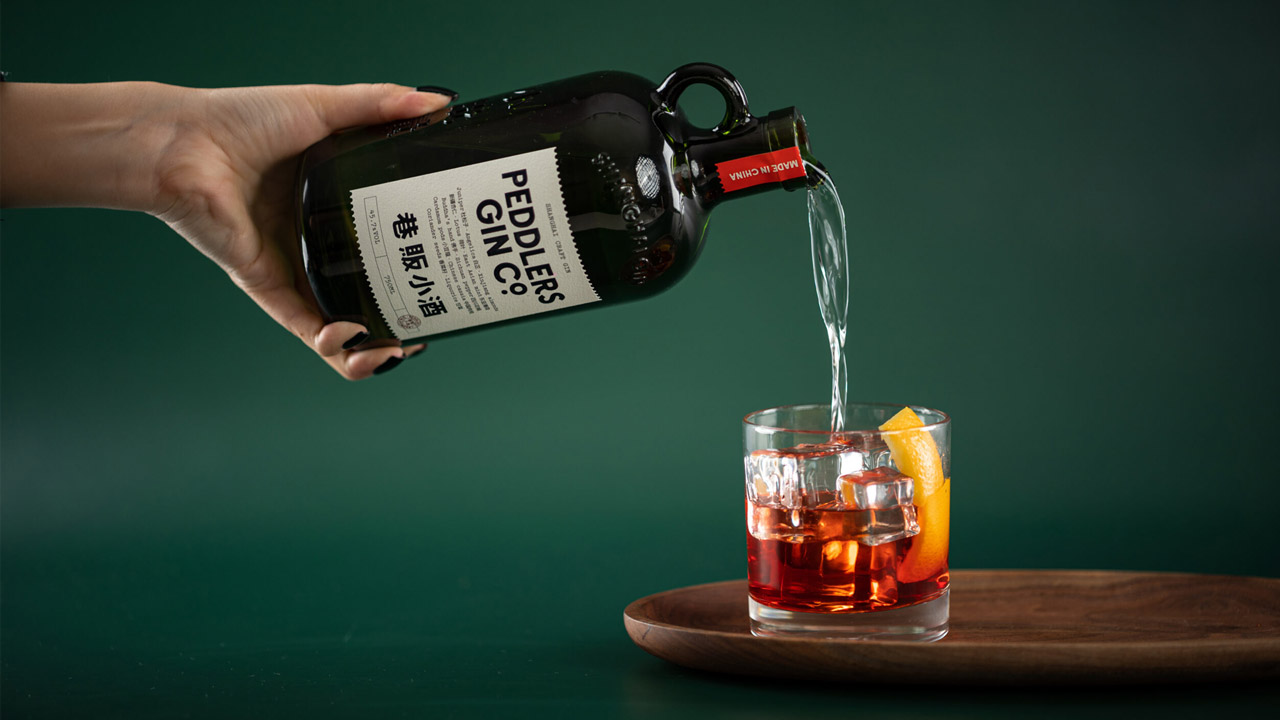
Peddlers Gin Co.
The World’s First Shanghai Gin.
China is not usually known for gin; the market is dominated by baijiu, beer, rice wine and, more recently, whiskey. Peddlers Gin is looking to change that, highlighting their origin in Shanghai. Their signature Shanghai Gin merges East and West influences in their botanical fusion, including lotus, East Asian mint, Sichuan pepper and cardamom pods alongside the traditional juniper.
They say: “Born on the back streets of Shanghai, the hustle and bustle charm of the world’s biggest trading port was the perfect inspiration from a more adventurous gin.”
We like: After the gin boom of the mid-2010s, the focus has more recently moved to agave-based spirits. But clearly there is some life left in the gin category, and we think this is a great example of a product that has something new to say. From the vintage-style bottle, to the mix of Chinese and English on the label, Peddlers is breaking new ground in this category.
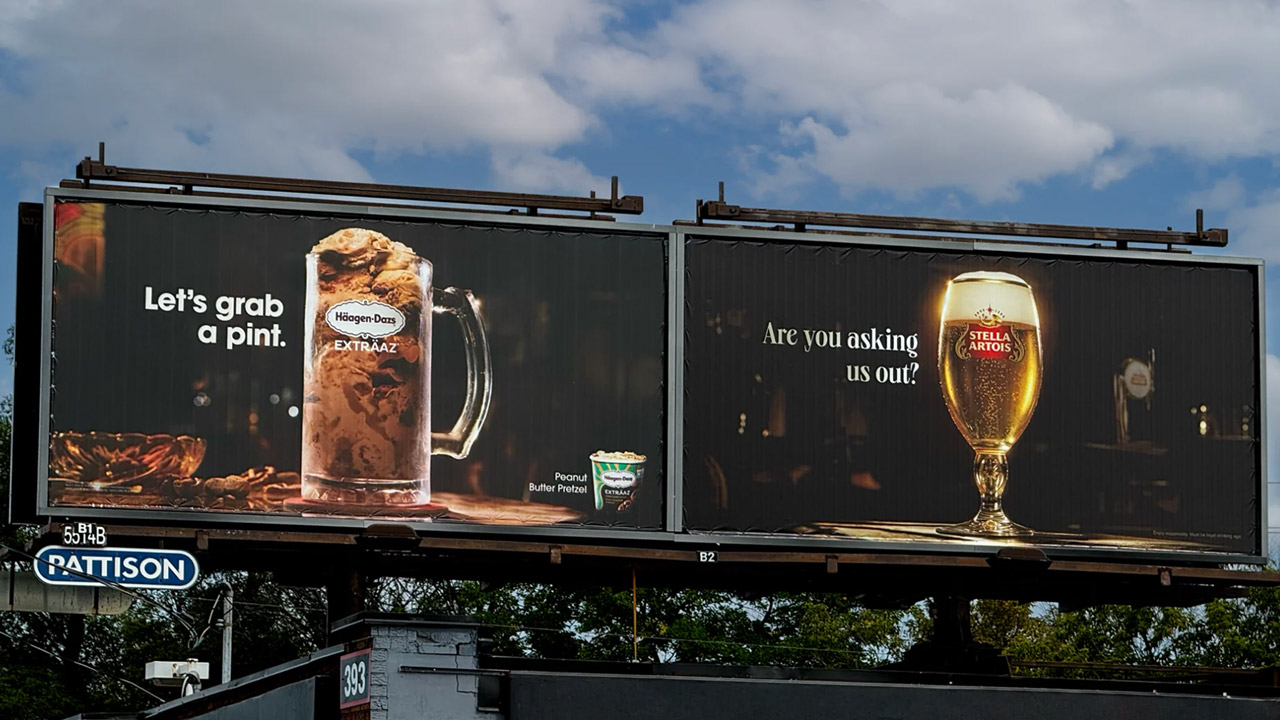
Stella Artois x Häagen-Dazs
Let’s grab a pint.
It started with a pun. This summer, Häagen-Dazs launched a Toronto billboard campaign playing on the two meanings of “pint”: “Let’s grab a pint”. Within a week, Stella Artois had replied from a neighbouring site, unprompted: “Are you asking us out?” The flirtation spread across billboards, streetcars and a mobile ad truck, and neither brand planned it in advance.
We love: Brand banter usually lives on social, where it’s cheap and easy to delete. Putting it on paid out-of-home raises the stakes, and the unplanned feel makes it all the more charming. Beer and ice cream aren’t fighting over the same spend, so both brands double their reach without paying the full media bill.
Patrón
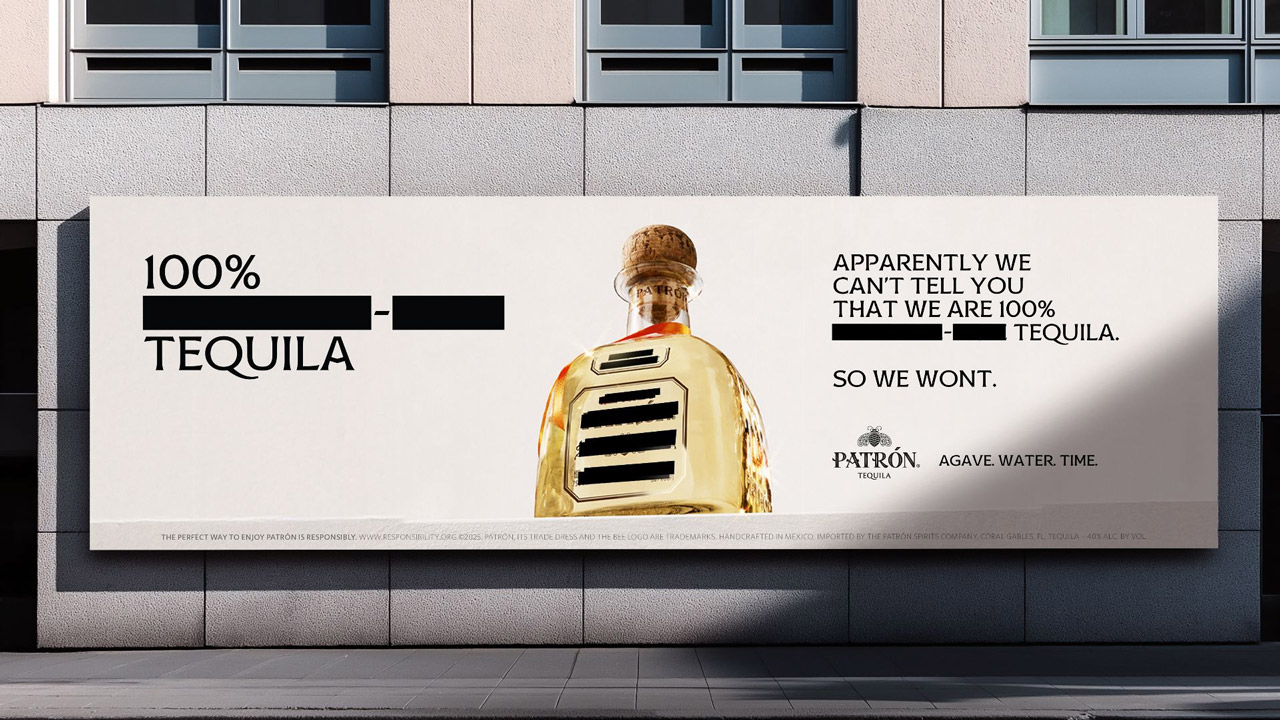
Censored Truth.
Tequila rules let brands use up to 1% additives without disclosing them. That also makes it hard for brands made without them to say so. Patrón, made from just agave, water and yeast, has turned that restriction into the campaign. Censored Truth runs across out-of-home in New York, New Orleans, Atlanta and Chicago, with blacked-out copy, redacted visuals and bleeped audio standing in for the claim it can’t make outright.
We love: A regulatory constraint turned into the creative idea. Redaction is instantly recognisable and a little cheeky, and it makes people curious about what’s being hidden. With ultra-processed food under scrutiny on both sides of the Atlantic, “what’s in it?” has become a premium question, and Patrón has found a way to answer it loudly.
Snickers
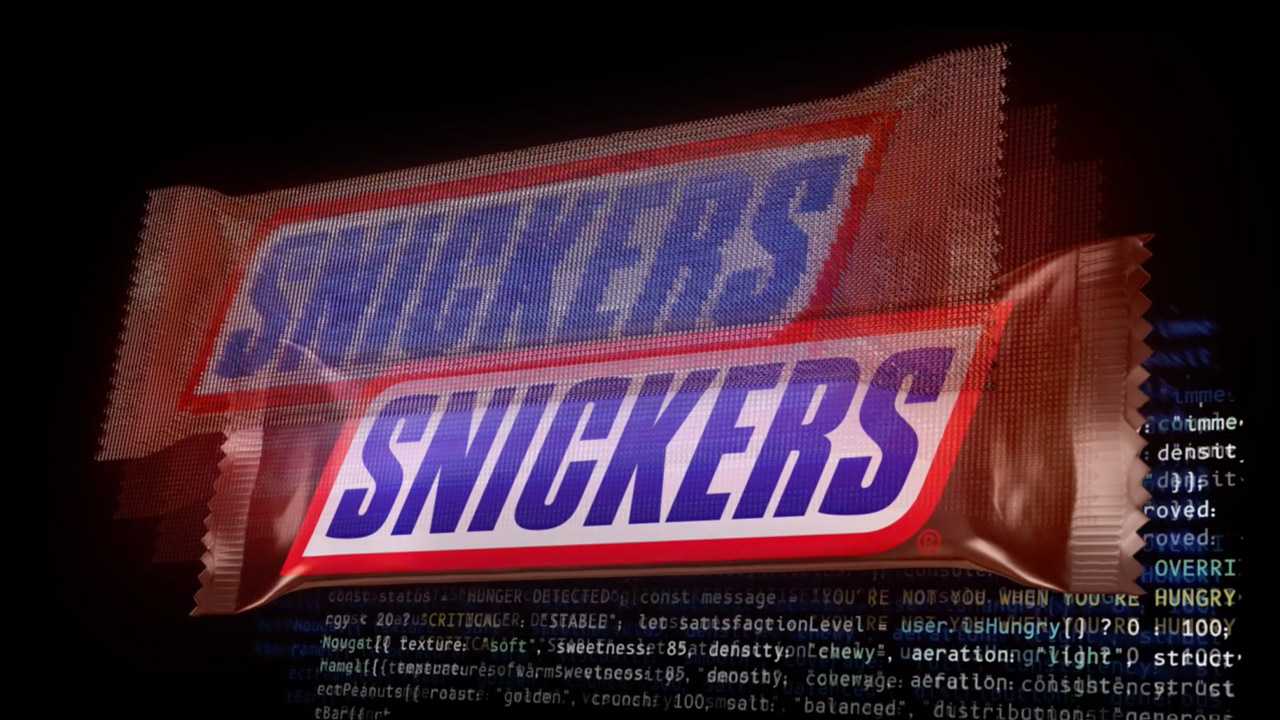
Hungr.AI.
Snickers has taken “You’re not you when you’re hungry” into the age of the chatbot. Hungr.AI is what Mars calls the world’s first “digital candy bar”. It’s a block of prompt text you copy from the Snickers site and paste into your AI assistant when it starts getting things wrong. US adults who joined in on Reddit or Snapchat could also claim a real bar via DoorDash.
We love: A 16-year-old platform finding a perfectly logical new home. Snickers’ line was always a diagnosis with a fix attached, which makes it easy to turn into an instruction for a machine. It cost almost nothing to make, and users carry it into a space brands can barely buy their way into.

Ikea
Kallax Storageborn.
Anyone who has played Skyrim knows the pain of carrying too much loot. Ikea, with agency Mother and modding studio Kinggath Creations, has the fix: Kallax Storageborn, a free downloadable companion. It’s a sentient Kallax shelving unit, voiced by Matt Berry, that gives players unlimited storage, collects loot automatically and tidies their in-game home.
We love: Ikea has turned its product benefit into the gameplay. It solves a frustration players already have and shows exactly what a Kallax does, which sticks far better than a logo on an in-game wall.


Expert Insights To Help You Level Up Your Brand
Discover expert tips and insights to enhance your brand's presence.